Best Crawl Space Dehumidifier: Keeping Your Space Dry and Healthy
Spencer Turner • October 16, 2023

In this series, we'll explore the essential role that crawl space dehumidifiers play in maintaining optimal moisture levels and air quality within your home's crawl space. From understanding the key features to look for when choosing the right dehumidifier to exploring expert insights on installation and maintenance, join us as we delve into the world of effective crawl space moisture control for a healthier and more comfortable living environment.


Key Considerations for Choosing the Best Crawl Space Dehumidifier

Selecting the best crawl space dehumidifier requires careful consideration of various factors to ensure that your investment effectively addresses moisture issues and promotes a healthier environment. First and foremost, consider the size of your crawl space – dehumidifiers are available in various capacities, and choosing one that matches the dimensions of your space is crucial for optimal performance. Additionally, look for dehumidifiers with features such as automatic humidity control, continuous drainage options, and energy efficiency ratings to ensure efficient and hassle-free operation.


It's also
essential to factor in the humidity levels in your crawl space and the climate in your region. If your crawl space experiences consistently high humidity, you might need a more powerful dehumidifier. Conversely, in milder climates, a less powerful unit might suffice. Don't overlook the noise level of the dehumidifier, especially if your crawl space is located near living areas. By carefully evaluating these key considerations and matching them to your specific crawl space conditions, you can choose the best crawl space dehumidifier that effectively combats moisture, prevents mold growth, and promotes a dry and healthy environment.

Benefits of Investing in the Best Crawl Space Dehumidifier for Your Home

Investing in the best crawl space dehumidifier can yield a multitude of benefits that extend far beyond moisture control. Firstly, a high-quality dehumidifier helps prevent the growth of mold, mildew, and other moisture-related issues that can compromise your home's structural integrity and air quality. By maintaining optimal humidity levels, you're not only safeguarding your property but also creating a healthier living environment for you and your family.


Furthermore, a well-chosen crawl space dehumidifier contributes to energy efficiency by reducing the workload of your heating and cooling systems. When humidity levels are balanced, your HVAC systems operate more effectively, resulting in potential energy savings. Additionally, the improved air quality resulting from controlled humidity can alleviate respiratory issues and allergies, leading to a more comfortable and healthier lifestyle. Ultimately, investing in the best crawl space dehumidifier is an investment in the well-being of your home, your loved ones, and the longevity of your property.

Expert Advice on Choosing and Using the Best Crawl Space Dehumidifier

When it comes to choosing and using the best crawl space dehumidifier, seeking expert advice can provide invaluable insights to ensure optimal results. Experts recommend considering factors like the size of your crawl space, local climate conditions, and the dehumidifier's capacity before making a decision. Additionally, they stress the importance of selecting a dehumidifier with features such as automatic humidity control, continuous drainage options, and energy efficiency to ensure efficient and convenient operation.


Expert advice doesn't stop at the selection phase – it also extends to proper installation and maintenance. Professionals emphasize the significance of positioning the dehumidifier in a central location within the crawl space to ensure even moisture control. Regular maintenance, such as cleaning the filter and checking drainage systems, is crucial to maintain the dehumidifier's effectiveness. By heeding expert advice throughout the entire process, from choosing the right unit to proper usage and maintenance, you can confidently harness the benefits of the best crawl space dehumidifier for a drier, healthier living environment.

FAQs

  • Why do I need a crawl space dehumidifier?

    A crawl space dehumidifier is essential for maintaining optimal moisture levels in your crawl space, preventing issues like mold growth, wood rot, and structural damage. It also contributes to better air quality and energy efficiency throughout your home.

  • How do I determine the right size of dehumidifier for my crawl space?

    The size of the dehumidifier depends on the dimensions of your crawl space and the humidity levels. A larger crawl space or higher humidity levels may require a more powerful unit. Consulting experts or using sizing guidelines provided by manufacturers can help you make an informed decision.

  • What features should I look for in the best crawl space dehumidifier?

    Look for features like automatic humidity control, continuous drainage options, adjustable settings, and energy efficiency ratings. These features ensure that the dehumidifier operates effectively, reduces energy consumption, and requires minimal maintenance.

  • Can I install a crawl space dehumidifier myself?

    Installation depends on your DIY skills and the complexity of the installation process. While some homeowners can install dehumidifiers themselves, it's advisable to consult professionals if you're unsure or dealing with specific challenges like drainage or ventilation issues.

  • What are the benefits of using the best crawl space dehumidifier for my health and home?

    Using the best crawl space dehumidifier improves indoor air quality, prevents mold-related health issues, protects your home's structure, and contributes to energy efficiency by reducing the workload on your HVAC systems. It creates a drier, healthier living environment for you and your family.

Telephone receiver with a speech bubble containing three dots.

Contact EAS Environmental Today!

EAS Environmental will do everything we can to ensure your experience with us is excellent.

CALL US NOW

Request A FREE Estimate

Request a Free Estimate Form

Checkout Recent Post
By Spencer Turner July 23, 2026
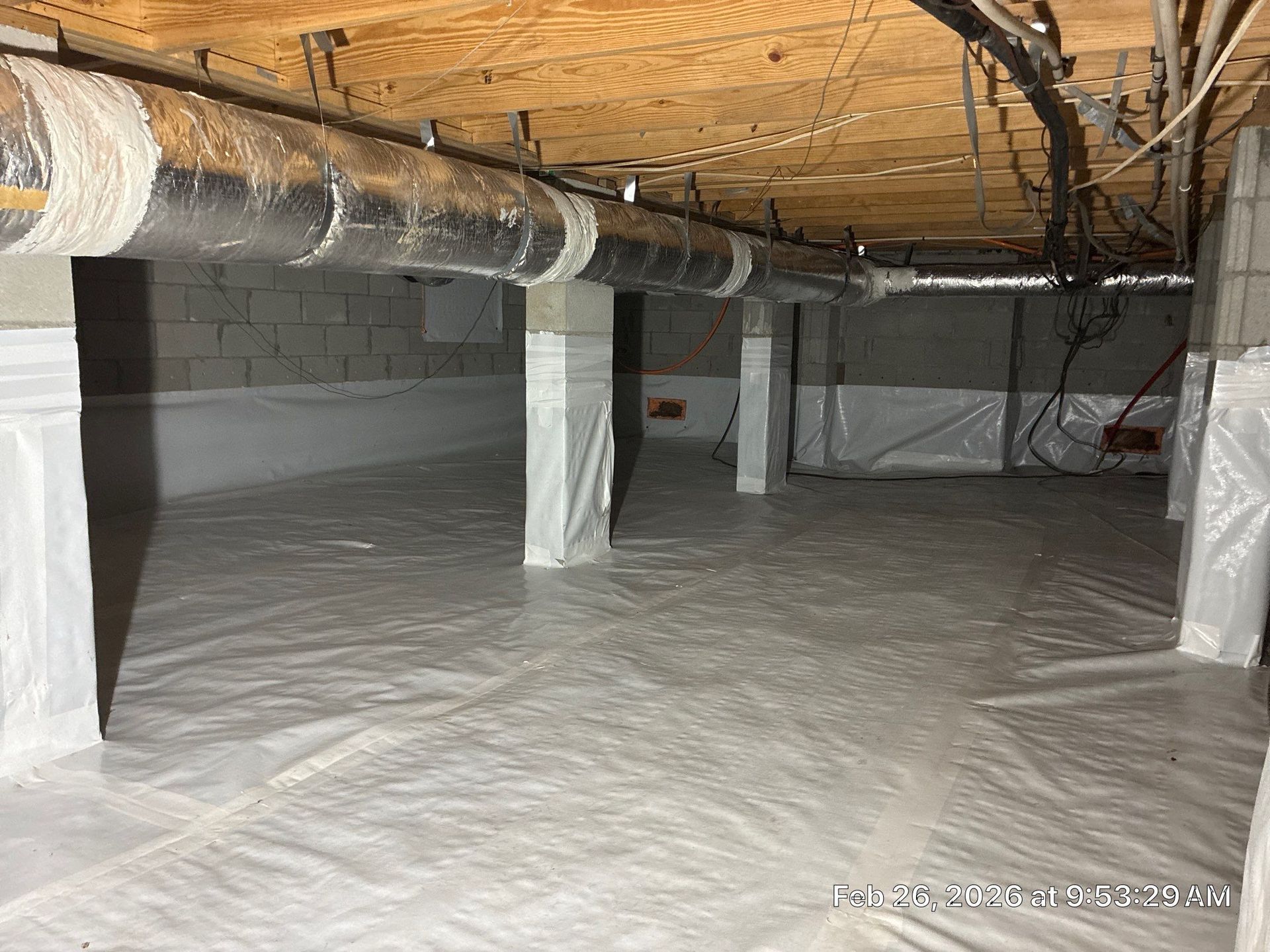
If you've discovered mold in your crawlspace, you may wonder whether it can affect the air quality inside your home. In many cases, YES - it can . Many homes naturally move air from the crawlspace into the living areas through a process commonly referred to as the stack effect . As warm air rises and exits the upper portions of a home, it can draw air upward from the crawlspace. If mold growth or excessive moisture is present beneath the home, mold spores, elevated humidity, and musty odors may enter the living space and contribute to indoor air quality concerns. Signs Your Crawlspace May Have a Moisture or Mold Problem While these signs do not necessarily confirm the presence of mold, they may indicate excess moisture or conditions that support microbial growth: Persistent musty odors inside the home Sustained elevated indoor humidity (greater than 60% Relative Humidity) Visible mold or mold/water staining near floor vents, baseboards, or crawlspace framing Damp, fallen, or deteriorated insulation Condensation or standing water beneath the home A professional inspection is the best way to determine the cause and extent of the problem. Why Does Mold Grow in Crawlspaces? Mold requires moisture to grow. Common sources of moisture include: Poor site drainage around the foundation Plumbing leaks Sustained high relative humidity (over 60%) Ground moisture or standing water Inadequate vapor barriers or moisture control systems Improper crawlspace ventilation Unless the moisture source is corrected, mold growth may continue or reoccur after remediation. Why Moisture Control Matters Effective mold remediation involves more than removing visible growth. Source removal is required in two ways. 1) the water source must be mitigated or removed (overflow, pipe leak/break, or high relative humidity), and 2) the mold spores (source of contamination) must be completely removed. Industry standards emphasize identifying and correcting the underlying moisture source before remediation, as to not promote recurrence. Addressing moisture helps reduce the likelihood of recurring mold growth and supports long-term crawlspace stability. Depending on the property's conditions, solutions may include plumbing repairs, drainage improvements, vapor barriers, crawlspace encapsulation (with dehumidification), or other moisture control measures. When Should You Have Your Crawlspace Inspected? Consider scheduling a professional crawlspace inspection if you notice: Persistent musty odors Visible mold or suspected microbial growth Water intrusion or standing water High indoor relative humidity Signs of moisture damage beneath the home Concerns about the condition of your crawlspace following heavy rain or plumbing leaks A qualified inspection can help determine whether moisture or mold is present and identify the most appropriate corrective measures. How EAS Environmental Can Help EAS Environmental provides the most detailed and well documented (photos, videos, and field notes) professional crawlspace inspections, mold remediation, moisture control, and crawlspace encapsulation services. Our team focuses on identifying the source of moisture, developing an appropriate repair plan, mitigation plan, and/or remediation plan, and helping property owners restore crawlspace conditions using industry-recognized restoration practices. If you're experiencing musty odors, moisture issues, or suspect mold beneath your home, contact EAS Environmental to schedule a professional assessment.
Mold
By Spencer Turner April 8, 2026
Water damage can happen unexpectedly—from burst pipes and leaking appliances, to severe storms and flooding. While the immediate concern is often structural damage, another serious issue can develop quickly: mold growth. Many property owners are surprised to learn just how fast mold can begin to grow after water exposure. Understanding the timeline of mold growth and the importance of quick action can help protect both your property and your health. How Quickly Can Mold Grow After Water Damage? Mold can begin growing within 24 to 48 hours after water damage occurs. When moisture is present and the environment is warm and humid, mold spores—which naturally exist in the air—can quickly settle and begin to grow on damp surfaces. The mold growth timeline typically looks like this: First 24 Hours Materials such as drywall, wood, carpet, and insulation begin absorbing moisture. Mold spores may settle in damp areas. 24–48 Hours Mold colonies can begin forming. Musty odors may start to develop. Materials begin to swell, warp, or lose integrity. 48–72 Hours Mold growth becomes more visible. Spores begin spreading to nearby surfaces. Air quality begins to noticeably decline. Certain materials may no longer be salvageable. 3–7 Days Mold colonies expand rapidly. Structural materials may begin deteriorating. Strong, persistent odors develop throughout the space. Contamination can spread into HVAC systems. Because of this rapid growth timeline, immediate water extraction and drying are critical to prevent further damage, limit mold development, and improve the chances of salvaging affected materials.
By Spencer Turner January 23, 2026
When people hear the word “asbestos,” it can feel intimidating—and for good reason. Asbestos-Containing Materials (ACMs) must be handled carefully, even when they’re considered non-friable. The key is experience, preparation, and strict control throughout the entire process. At EAS Environmental, we provide asbestos abatement services throughout both South Carolina and Georgia. We use the information we are given by the Client to come up with a stellar Scope of Work including engineering controls, removal/abatement protocols, and disposal methods. Our goal is to help you understand how professional abatement is planned, executed, and verified, so that you can make the right decision when deciding who to hire as an abatement contractor. Abstract: EAS Environmental completed a Class II, non-friable Category II asbestos abatement project at a commercial facility in Savannah, GA, involving the controlled removal of asbestos-containing Transite wall panels. In this case study, we will outline the process of how our team prepared the regulated area, used engineering controls like containment barriers and HEPA filtration, the methods we used in order to remove panels while intact, packaged waste correctly for disposal, and followed documentation and inspection procedures to ensure a safe, compliant close-out. This article emphasizes the importance of the amount of care that these types of abatement projects require.
By Spencer Turner December 2, 2025
In today’s world, we believe that true success comes from more than just business growth — it’s about giving back and making a real difference where we live and work. At EAS Environmental LLC, we’re proud to be a full-service disaster restoration and environmental remediation company based in the Charleston, South Carolina region. While our work focuses on restoration, abatement, and remediation, our mission goes far beyond that. Every project we take on is driven by a deeper purpose: to help build safer, healthier environments for our neighbors, especially those most vulnerable to environmental risks. Below we’ll explore how EAS Environmental is making a difference — and then identify five key pillars of corporate responsibility in action.
SEE MORE

Got a Question? We’re Here to Help.

You can arrange an appointment or make an enquiry by phone or email, orget in touch to us via our contact form.
CONTACT US TODAY