Hazardous Material Containment Services in Charleston, SC & South Carolina
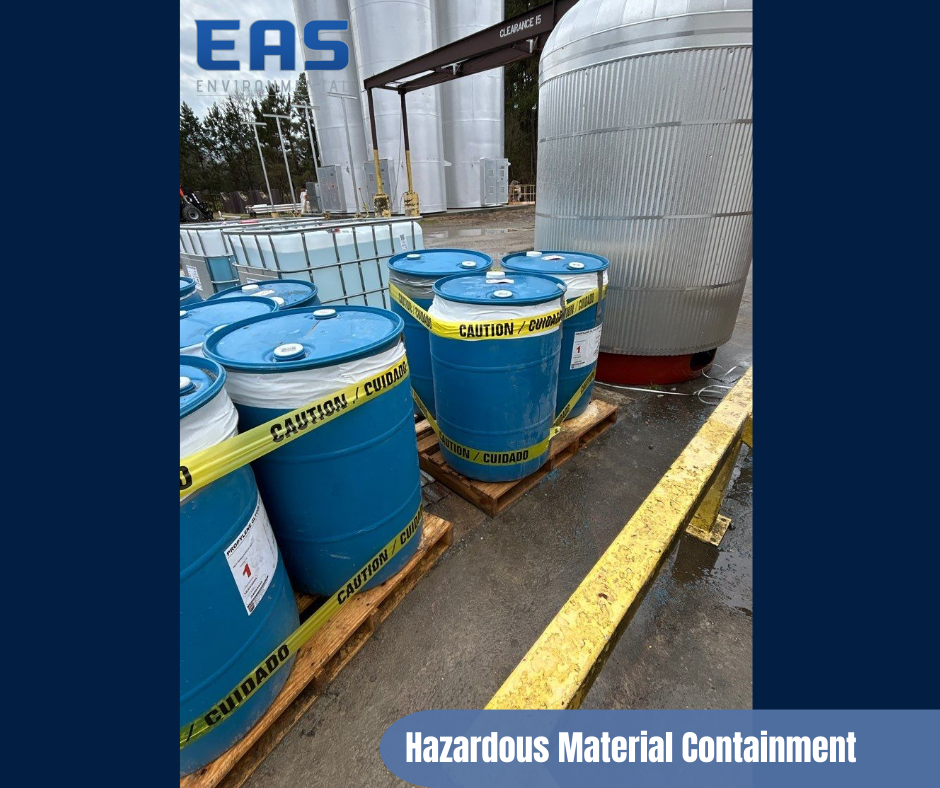
Hazardous materials can pose immediate and long-term risks to people, property, and the environment if they are not properly isolated and controlled. Whether resulting from a spill, structural damage, fire, storm event, or industrial incident, hazardous materials must be contained quickly and effectively to prevent spread, exposure, and escalation.
EAS Environmental provides professional Hazardous Material Containment services throughout Charleston, the Lowcountry, and South Carolina, helping stabilize affected areas, protect occupants, and create safe conditions for cleanup, remediation, or restoration activities.
What Is Hazardous Material Containment?
Hazardous material containment is the process of isolating, controlling, and preventing the spread of hazardous substances following an incident. Containment does not always involve immediate removal; instead, it focuses on stopping migration and reducing exposure until full remediation can be safely performed.
Hazardous material containment may include:
- Establishing controlled work zones
- Isolating contaminated areas
- Preventing airborne or surface spread
- Securing affected materials or structures
- Supporting safe cleanup and remediation
Containment is often the first and most critical step in managing hazardous material incidents.
Why Hazardous Material Containment Is Critical
Once released, hazardous materials can migrate rapidly through air, water, soil, and building materials. Without containment, contamination can expand beyond the original area and increase health and environmental risks.
Professional containment helps:
- Reduce exposure to occupants and responders
- Prevent cross-contamination of clean areas
- Limit environmental impact
- Stabilize unsafe conditions
- Allow safe access for remediation teams
Containment is essential before cleanup, removal, or decontamination can occur.
Common Situations Requiring Hazardous Material Containment
Hazardous material containment is commonly required after:
- Chemical spills or leaks
- Fire or smoke damage involving hazardous residues
- Storm or flood events spreading contaminants
- Structural damage exposing hazardous materials
- Industrial or manufacturing incidents
- Transportation-related releases
- Maintenance or equipment failures
Even small releases can require containment if hazardous materials are present.
Types of Hazardous Materials That May Require Containment
Hazardous material containment services may involve substances such as:
- Industrial chemicals
- Cleaning agents and solvents
- Oils, fuels, and petroleum products
- Corrosive or reactive substances
- Toxic residues or particulates
- Laboratory or healthcare-related materials
Each material presents unique risks that determine the containment strategy.
Our Hazardous Material Containment Process
Step 1: Site Assessment & Hazard Identification
We evaluate the material involved, exposure risks, and affected areas to determine containment requirements.
Step 2: Area Isolation & Access Control
Containment zones are established to restrict access and prevent the spread of hazardous materials.
Step 3: Containment System Installation
Appropriate containment measures are implemented to control air movement, surface migration, or material displacement.
Step 4: Environmental & Safety Controls
Measures are put in place to protect occupants, responders, and surrounding areas during containment.
Step 5: Stabilization & Monitoring
Contained areas are monitored to ensure continued control while cleanup or remediation plans are executed.
Is Hazardous Material Containment Safe?
When performed by trained professionals, hazardous material containment is safe and effective. Proper containment reduces risk by controlling exposure pathways and preventing further spread of contaminants. Untrained or improvised containment efforts can increase hazards and should be avoided.
How Containment Supports Cleanup and Remediation
Containment is often required before:
- Chemical spill cleanup
- Decontamination procedures
- Structural repairs
- Debris removal
- Environmental remediation
By stabilizing the situation, containment allows subsequent work to proceed safely and efficiently.
Got a Question? We’re Here to Help.
You can arrange an appointment or make an enquiry by phone or email, orget in touch to us via our contact form.
Frequently AskED Questions
Take a moment to read answers to our most frequently asked questions about our services.
Cities We Proudly Service
Click on the dropdown below to see all the cities we provide non-friable asbestos contracting services.
Contact EAS Environmental Today!
EAS Environmental will do everything we can to ensure your experience with us is excellent.
Request A FREE Estimate
Request a Free Estimate Form
24-Hour Emergency Service
Contact Information
Phone: 843-460-8391
Address: 125 Bud Ln., Summerville, SC 29486
Email: sturner@easenvironmental.com
Business Hours:
24/7 Open
Appointments Available
Servicing North Charleston and all of South Carolina
EAS Environmental provides many services related to environmental hazardous abatement and cleanup as well as solving moisture control issues.
Related Services
Please see our most requested services listed below. EAS Environmental is here for you when you need asbestos or lead abatement, or moisture control service to prevent mold growth.
Asbestos Removal
With asbestos removal services, you'll never again have to worry about this hazardous substance that could wreak havoc on your health and wellbeing. Whether its in a private residence or commercial setting, we're a licensed and certified abatement firm that will remove asbestos from anywhere it may be found!
Demolition Services
It's hard to find a good demolition company, especially if you're in an emergency situation. We are the best demolition company around, and we can handle any job big or small. Our team of experts have years of experience under their belt so they'll be able to get your project done right the first time.
Disaster Restoration: Fire and Water Damage Restoration
When disaster strikes, fast action is critical. If your home or business has suffered fire or smoke damage, don’t wait—EAS Environmental is here to help. Our expert team provides responsive and prompt fire and damage restoration services to help you recover quickly and safely. Call us today to learn more about our fire damage repair services near you!
Schedule Your FREE Asbestos & Lead Evaluation!
Did you know that asbestos containing materials are still being sold in today? Call us today to find out more!