How to install french drain in crawl space
Spencer Turner • August 25, 2023

Installing a French drain in your crawl space is a proactive and effective way to manage excess moisture and safeguard your home from potential water-related issues. A French drain consists of a perforated pipe surrounded by gravel, designed to collect and redirect water away from the crawl space, preventing moisture buildup and reducing the risk of mold growth and structural damage. In this step-by-step guide, we will walk you through the process of installing a French drain in your crawl space, providing valuable insights and tips to create a dry and healthy living environment beneath your home.


Preparing for French Drain Installation: Crawl Space Assessment and Planning

Preparing for French drain installation in your crawl space is a crucial first step to ensure a successful and efficient drainage system. Before diving into the project, conduct a thorough crawl space assessment to evaluate the current moisture levels, potential water sources, and areas that require drainage improvements. Look for signs of water infiltration, such as dampness, standing water, or mold growth, as these indicate problem areas that need to be addressed.


Once you've assessed the crawl space, create a detailed plan for the French drain installation. Determine the best location and route for the drain, considering the slope and terrain of your crawl space. This planning phase helps you identify potential challenges and allows you to design a drainage system that suits your crawl space's specific needs.


Additionally, decide whether you want an interior or exterior French drain, as each option comes with its own set of advantages and considerations. Proper preparation ensures that you have a well-thought-out strategy in place before commencing the installation, setting the stage for a successful project that effectively manages moisture and protects your crawl space from potential water-related issues.

Excavation and Trenching: Creating the Path for Your Crawl Space French Drain

Excavation and trenching are vital steps in the process of installing a French drain in your crawl space, creating the necessary path for the drainage system to effectively manage excess water. To begin, carefully mark the perimeter of your crawl space and use a shovel or excavation equipment to dig a trench along the designated route. The depth and width of the trench will depend on your crawl space's specific needs and the size of the French drain pipe.


As you excavate, ensure that the trench slopes away from the crawl space, allowing gravity to guide the water flow towards the designated drainage area. This slope is critical to ensure proper drainage and prevent water from pooling around the foundation. In addition to the primary trench along the perimeter, consider creating additional trenches to intercept water sources or address problem areas. Once the excavation is complete, you're ready to proceed with the installation of the French drain, positioning it in the trench to efficiently collect and redirect water away from your crawl space. By carefully conducting excavation and trenching, you create a clear and functional path for your French drain, enabling it to fulfill its purpose of effectively managing water and maintaining a dry and healthy crawl space environment.


Step-by-Step Installation Guide: Building Your French Drain in the Crawl Space

Building a French drain in your crawl space is a step-by-step process that can effectively manage excess moisture and protect your home from potential water-related issues. Following this installation guide will ensure a successful project and create a dry and healthy living environment beneath your home.


Step 1: Excavate the Trench

Start by carefully marking the perimeter of your crawl space and excavating a trench along the designated route. The depth and width of the trench will depend on your crawl space's specific needs and the size of the French drain pipe. Ensure that the trench slopes away from the crawl space to facilitate proper water flow.


Step 2: Install the French Drain Pipe

Place a perforated pipe in the trench, positioning it with the perforations facing downward to allow water to enter the pipe. The pipe should slope slightly to encourage water flow towards the designated drainage area. Fill the trench with gravel, surrounding the French drain pipe to create a channel for water to move freely.


Step 3: Cover with Landscape Fabric and Backfill

Cover the gravel and French drain pipe with landscape fabric to prevent soil from seeping into the pipe. Then, backfill the trench with soil, ensuring the pipe is adequately covered. Compact the soil gently to create a level surface.


Step 4: Monitor and Test

After completing the installation, test the French drain by pouring water into the trench and observing its functionality. Regularly monitor the drain to identify any issues and ensure that it effectively redirects water away from the crawl space.


By following this step-by-step installation guide, you can successfully build a French drain in your crawl space, providing an efficient and cost-effective solution for managing moisture and protecting your home from water-related concerns. Creating a dry and healthy crawl space environment helps safeguard your home's structural integrity and promotes a comfortable living environment for you and your family.

FAQs

  • Is it necessary to install a French drain in my crawl space, or are there alternative drainage solutions?

    While a French drain is a popular and effective drainage solution for crawl spaces, there are alternative options. Sump pumps, interior or exterior drainage systems, and the installation of vapor barriers are some alternatives that can also address excess moisture issues. It is essential to assess your crawl space's specific needs and consult with professionals to determine the most suitable drainage solution for your home.

  • Can I install a French drain in my crawl space myself, or should I hire a professional?

    DIY installation of a French drain in a crawl space is possible, but it requires a certain level of construction knowledge and skills. Homeowners with experience in drainage systems and construction may successfully tackle the project. However, if you lack the necessary expertise or have a complex crawl space, hiring professional experts can ensure proper installation and optimal performance of the drainage system.

  • How long does it typically take to install a French drain in a crawl space?

    The time required to install a French drain in a crawl space can vary depending on the size and complexity of your crawl space, as well as your level of experience. Generally, DIY installation may take several days to complete, including excavation, trenching, and backfilling. Professional installation may be completed more efficiently, as experts have the necessary tools and equipment.

  • What materials and tools are required for installing a French drain in my crawl space?

    To install a French drain in your crawl space, you will need a shovel, level, measuring tape, wheelbarrow, perforated pipe, gravel, landscape fabric, and backfill soil. Additional materials like a sump pump or vapor barrier may be required, depending on your crawl space's specific needs and the drainage solution you choose.

  • Can I install a French drain in an existing crawl space, or does it require a new construction project?

    A French drain can be installed in both existing crawl spaces and new construction projects. For existing crawl spaces, careful planning and excavation may be required to create a path for the French drain. Consulting with professionals can help determine the best approach for your specific situation.

Telephone receiver with a speech bubble containing three dots.

Contact EAS Environmental Today!

EAS Environmental will do everything we can to ensure your experience with us is excellent.

CALL US NOW

Request A FREE Estimate

Request a Free Estimate Form

Checkout Recent Post
By Spencer Turner January 23, 2026
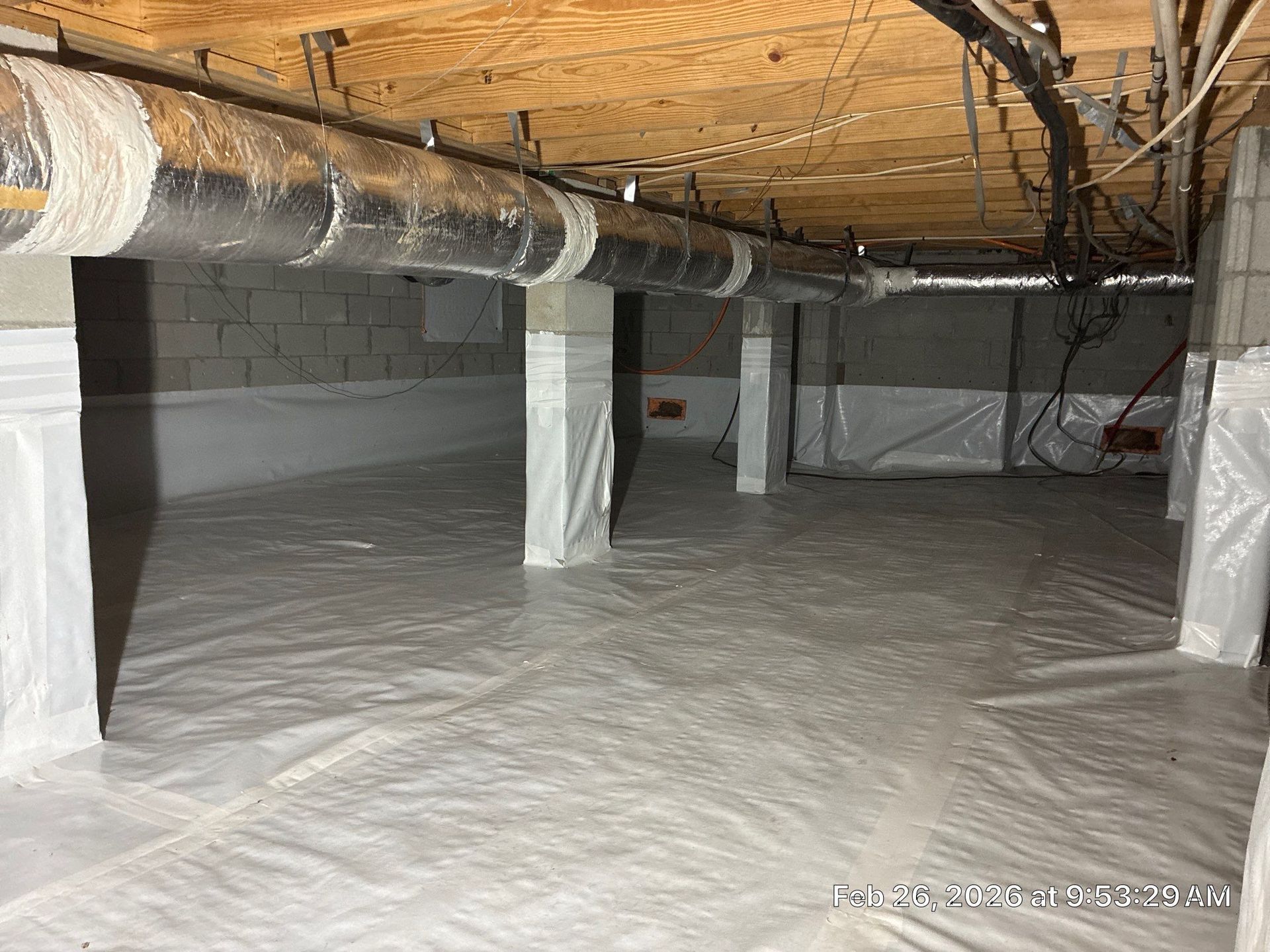
When people hear the word “asbestos,” it can feel intimidating—and for good reason. Asbestos-Containing Materials (ACMs) must be handled carefully, even when they’re considered non-friable. The key is experience, preparation, and strict control throughout the entire process. At EAS Environmental, we provide asbestos abatement services throughout both South Carolina and Georgia. We use the information we are given by the Client to come up with a stellar Scope of Work including engineering controls, removal/abatement protocols, and disposal methods. Our goal is to help you understand how professional abatement is planned, executed, and verified, so that you can make the right decision when deciding who to hire as an abatement contractor. Abstract: EAS Environmental completed a Class II, non-friable Category II asbestos abatement project at a commercial facility in Savannah, GA, involving the controlled removal of asbestos-containing Transite wall panels. In this case study, we will outline the process of how our team prepared the regulated area, used engineering controls like containment barriers and HEPA filtration, the methods we used in order to remove panels while intact, packaged waste correctly for disposal, and followed documentation and inspection procedures to ensure a safe, compliant close-out. This article emphasizes the importance of the amount of care that these types of abatement projects require.
By Spencer Turner December 2, 2025
In today’s world, we believe that true success comes from more than just business growth — it’s about giving back and making a real difference where we live and work. At EAS Environmental LLC, we’re proud to be a full-service disaster restoration and environmental remediation company based in the Charleston, South Carolina region. While our work focuses on restoration, abatement, and remediation, our mission goes far beyond that. Every project we take on is driven by a deeper purpose: to help build safer, healthier environments for our neighbors, especially those most vulnerable to environmental risks. Below we’ll explore how EAS Environmental is making a difference — and then identify five key pillars of corporate responsibility in action.
By Spencer Turner October 27, 2025
Restoration work can feel overwhelming—especially when you’re staring down the aftermath of a flood, fire, or hazardous material exposure. At EAS Environmental, we believe that transparency and trust are key. That’s why we’re pulling back the curtain on what a real restoration project looks like when you work with our team—from the first call to the final walkthrough. Our goal is to help you understand every step of the process, so you know exactly what’s happening and why. With decades of experience and a commitment to safety, we make sure your property is restored the right way—the first time. By the end, you’ll not only have a clean, safe space again but also the peace of mind that comes from knowing it was done properly. Abstract: A grease fire broke out in the kitchen of a Florence apartment, spreading smoke and soot to the walls, ceilings, and floors throughout the second-story residence. Just your typical fire mitigation job, right? Wrong; after some third-party sampling and laboratory analysis, Asbestos-Containing Materials (ACMs) were identified in the apartment. In this case study, we walk through how our company, EAS Environmental, handled the turn-key process of the asbestos abatement, and then rebuilding the property to its pre-loss condition. From navigating complex environmental regulations to coordinating restoration timelines, this project showcased the importance of expertise, communication, and precision in every phase. This article highlights how our team transformed an unexpected challenge into a seamless, compliant, and fully restored living space. The Situation: Fire Damages Disturb Asbestos Containing Materials The tenant accidentally started a grease fire in the kitchen of their second-story Florence apartment. The good news: no one was seriously injured. The bad news: the fire left behind significant damage – smoke and soot coating every surface in every room. Fire mitigation projects happen every day, but not all of them come with an unexpected condition lurking beneath the layers of soot and smoke.
By Spencer Turner September 15, 2025
It doesn’t take a massive fire to cause a lot of damage. In fact, even a small electrical fire can fill your entire home with thick smoke, leaving behind soot on surfaces and that stubborn burnt smell that just won’t go away. That’s exactly what happened in one home we recently worked on—and it’s a great example of how EAS Environmental steps in quickly with expert fire damage mitigation and structural cleaning services to make things right again
SEE MORE

Got a Question? We’re Here to Help.

You can arrange an appointment or make an enquiry by phone or email, orget in touch to us via our contact form.

CONTACT US TODAY